
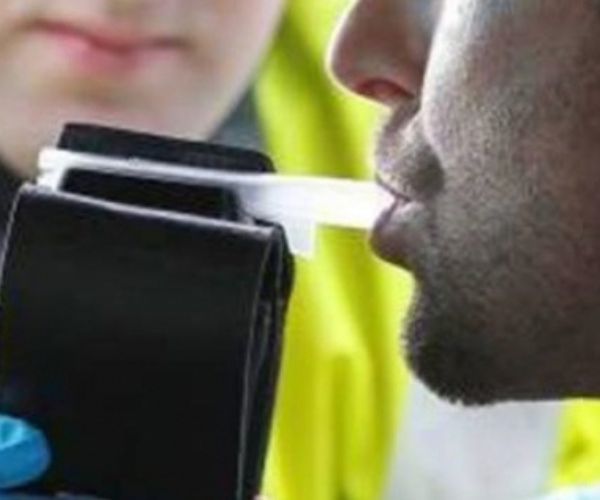

Regulations on Alcohol, Drugs, and Medications in Traffic
Following a investigation into a company that tested its employees for alcohol and drugs, the Dutch Data Protection Authority (AP) stated in a 2016 report that alcohol and drug testing of employees is never permitted unless required by law. In the information sheet “Personal Data and Checks on the Use of Alcohol, Drugs, and Medications (ADM) in the Employment Relationship,” , the AP refers to the principles explicitly mentioned in the “Decree on Alcohol, Drugs, and Medications in Traffic.”
This decision allows for ADM testing of certain occupational groups specified in the Shipping Act, the Railways Act, the Local Railways Act, and the Aviation Act. Such testing may only be conducted by public officials designated for that purpose by the minister. If the proposed testing does not fall under these exceptions, alcohol and drug testing within the employment relationship is prohibited at all times. But what happens next?
Increased safety risk
In most situations where an employer decides to conduct ADM testing, this decision is prompted by an increased safety risk that may arise from ADM use. Examples include forklift drivers, crane operators, and employees at companies subject to the BRZO regulations. In these cases, a single mistake made by an employee under the influence of alcohol, drugs, or certain medications can have serious consequences—not only for the employee themselves, but also for colleagues, nearby residents, other road users, and/or the environment. In some cases, a test may be conducted retroactively, such as in a situation involving possible drug use that occurred at the chemical company Shin-Etsu in 2016. The drug test conducted was reviewed by the court in a dismissal case challenged by the employee. The judge ruled in this specific case that a BRZO company may conduct drug tests given the strict safety requirements and the fact that no less intrusive means were available (principle of subsidiarity) to determine whether or not an employee was under the influence of drugs.
Amend legislation
Despite this exceptional case and the employers’ arguments, the AP maintains its position that current legislation, with the exception of the aforementioned exceptions, does not permit ADM testing. At the same time, the AP advises the minister to amend the law to permit this in certain cases. Based on the above argument, State Secretary Tamara van Ark recently announced her intention to introduce legislation that would allow companies in high-risk sectors to conduct ADM testing. Initially, legislation will be created for BRZO companies, where safety concerns are obviously very significant. Furthermore, it will be investigated whether comparable legislation can also be introduced for other sectors where major safety risks exist. Examples include road transport, port companies subject to the ISPS Code, or the construction industry.
But even then, testing should not be an end in itself, and the aforementioned principle of subsidiarity remains one of the key requirements under the GDPR. This means that less intrusive measures must first be demonstrably available and applied, such as combating the use or abuse of alcohol and drugs through a clear substance use policy, prevention, and education. Employers should already be tightening their ADM policies and actively promoting them so that, should ADM testing become possible, it can be demonstrated that less intrusive measures have been in place and applied for some time. Until then, ADM testing remains a bridge too far.
Role series
SERIS closely monitors legislation and advises its clients on the possibilities and limitations regarding ADM policies and alcohol and drug testing. For more information, please contact our security consultants.